

Operates reliably even with a wooden housing
Temperature evaluation test with camera installed
Do You Have Any of These Concerns?
Will heat build up inside a wooden enclosure?
Will the camera or CPU overheat?
Can it withstand long-term operation?
Test Results
Stable operation is possible even inside a wooden housing when properly configured.
By using a cooling fan in combination, the internal temperature of the housing can be efficiently reduced.
CPU temperature: Within acceptable range
Internal temperature: No significant issues
Test Overview
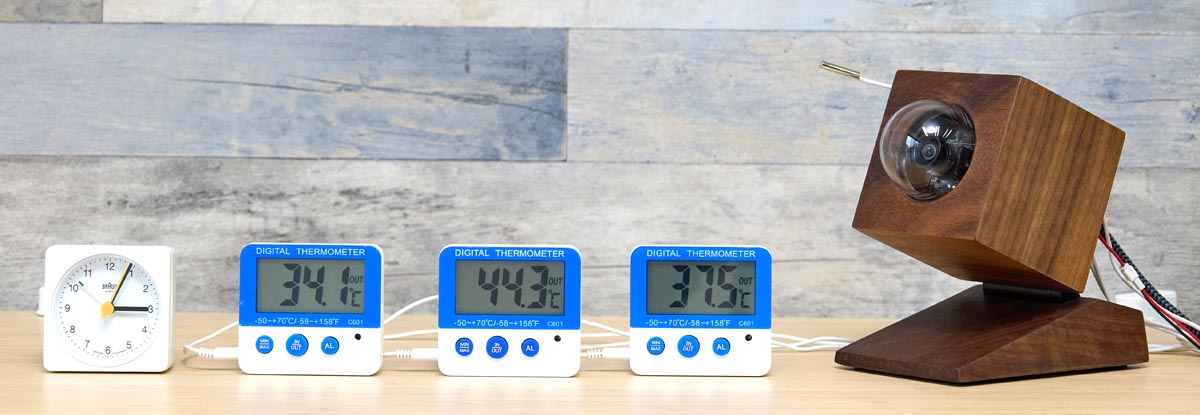
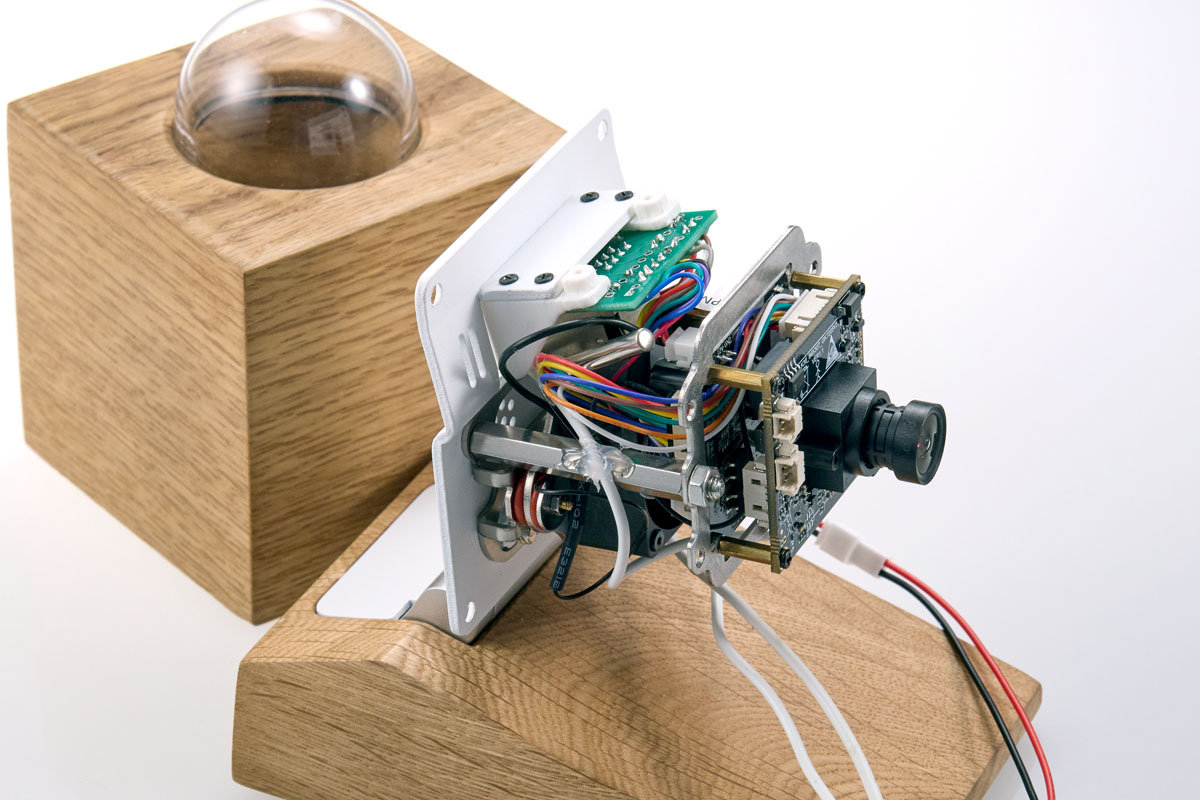
A camera was installed inside a wooden camera housing, and the temperature changes of both the internal housing environment and the CPU were evaluated using the cooling system (Entaniya Silent Mount 315).
If temperature rise inside the housing is a concern, implementing a cooling system can help achieve more stable operation.
2.64 W Industrial Camera (High-Power Camera)
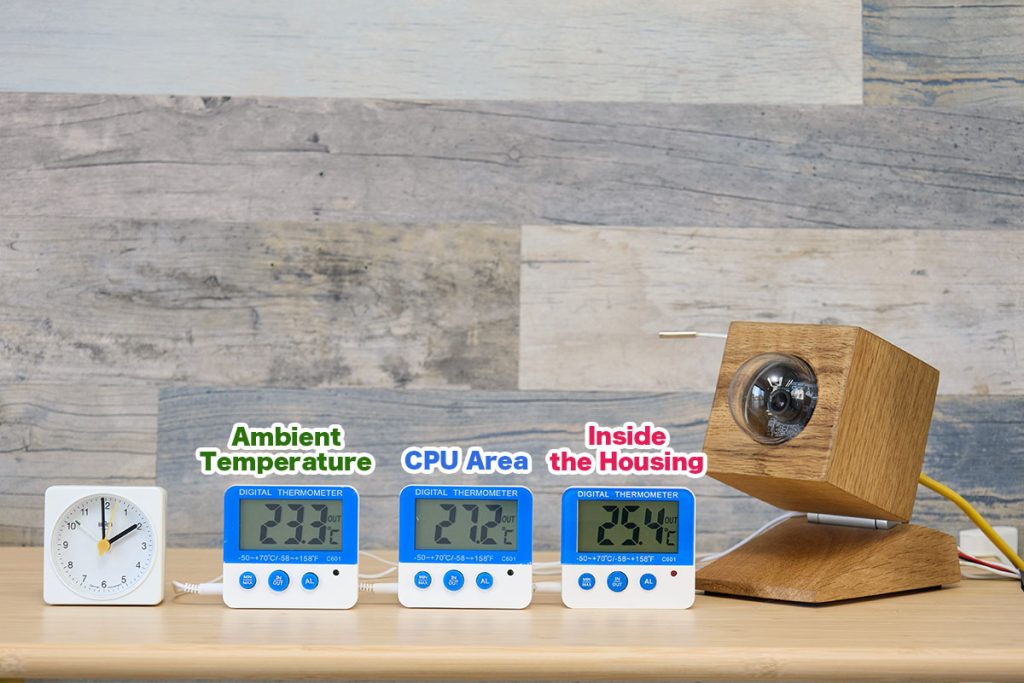
Test Environment
8-tatami Western-style room
Window opened approximately 10 cm
Air conditioner operated when room temperature increased (set to 30°C, low airflow)
Window opened when the air conditioner was turned off
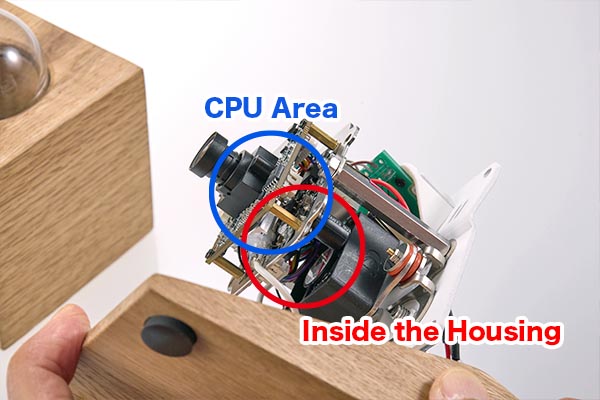
Equipment Used
| Item | Details |
| Camera | SIP-K676K5 |
| Image Sensor | SONY IMX676 |
| Processor | Hi3519DV500 |
| Camera power consumption | 2.64 W |
| PoE board | XR-PM3812AT |
| PoE board power consumption | Approx.0.3 W |
| Total system power consumption | Approx.2.9 W |
| Housing | Wooden Camera Housing |
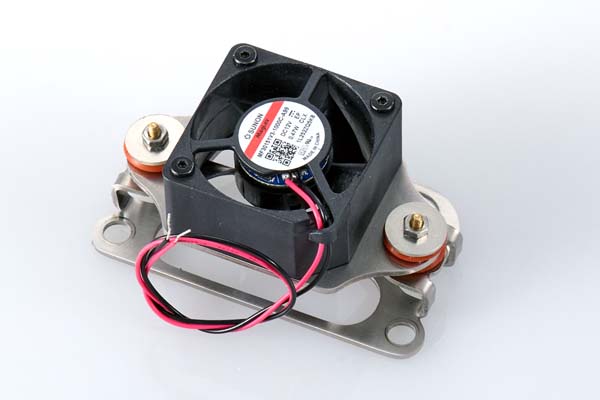
Cooling Structure (Entaniya Silent Mount 315)
| Configuration | Specifications |
| Internal fan | Sunon MF30151V3-1000C-A99 20mA |
Measurement results when using a 2.64 W industrial camera
| Measurement Items | Temperature Range |
| Ambient Temperature | 22〜34℃ |
| Inside the Housing | 32〜42℃ |
| CPU Area | 42〜52℃ |
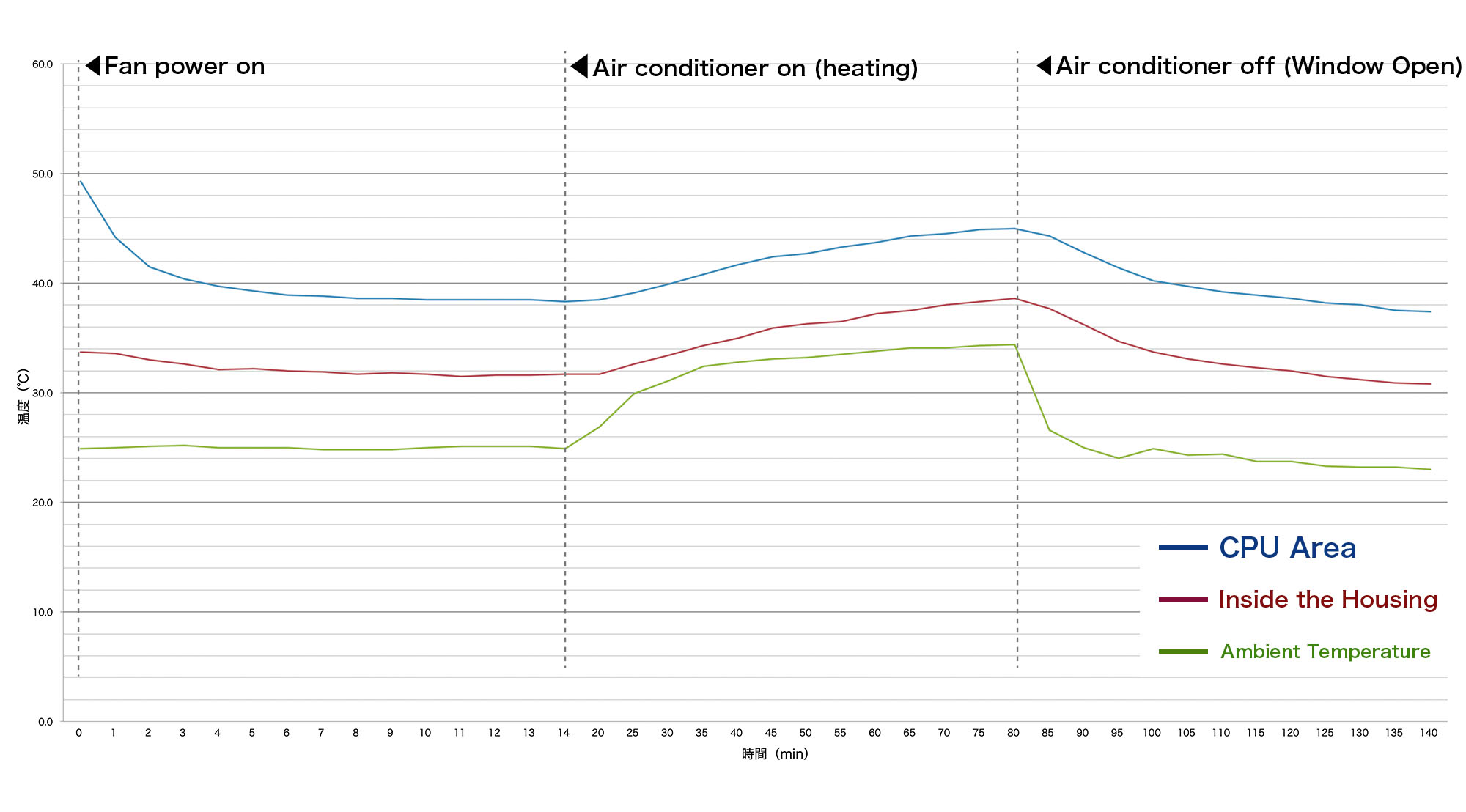
Based on the measurement results
Based on the measurement results, it was confirmed that the internal temperature of the case remains approximately +10°C above the ambient temperature.Based on this result, the estimated internal housing temperature and CPU temperature when using a camera with a power consumption of 2.64 W are shown below, and all values remain within the operating range.
| Ambient Temperature | Inside the Housing | CPU Area |
| -30℃ | -20℃ | -15℃ |
| -20℃ | -10℃ | -5℃ |
| -10℃ | 0℃ | 5℃ |
| 0℃ | 10℃ | 15℃ |
| 10℃ | 20℃ | 25℃ |
| 20℃ | 30℃ | 35℃ |
| 30℃ | 40℃ | 45℃ |
| 40℃ | 50℃ | 55℃ |
| 50℃ | 60℃ | 65℃ |
0.8 W USB Camera (Low-Power Camera)
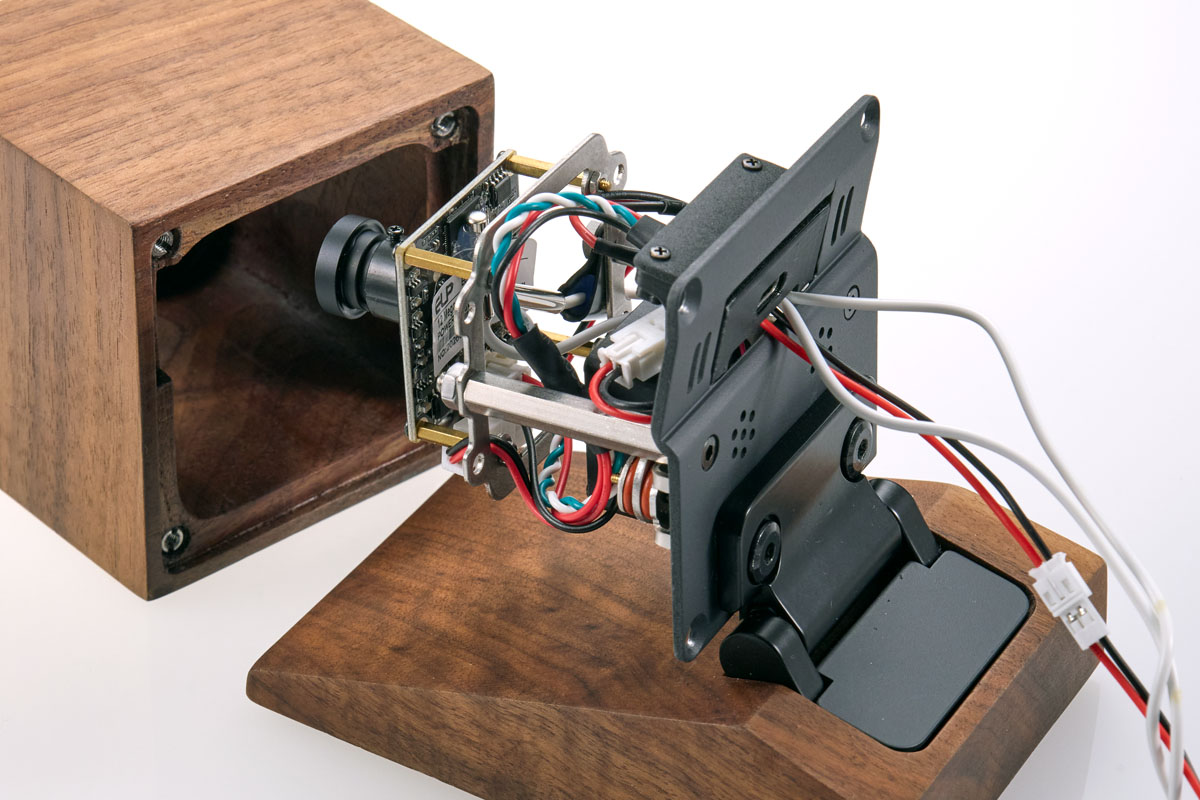
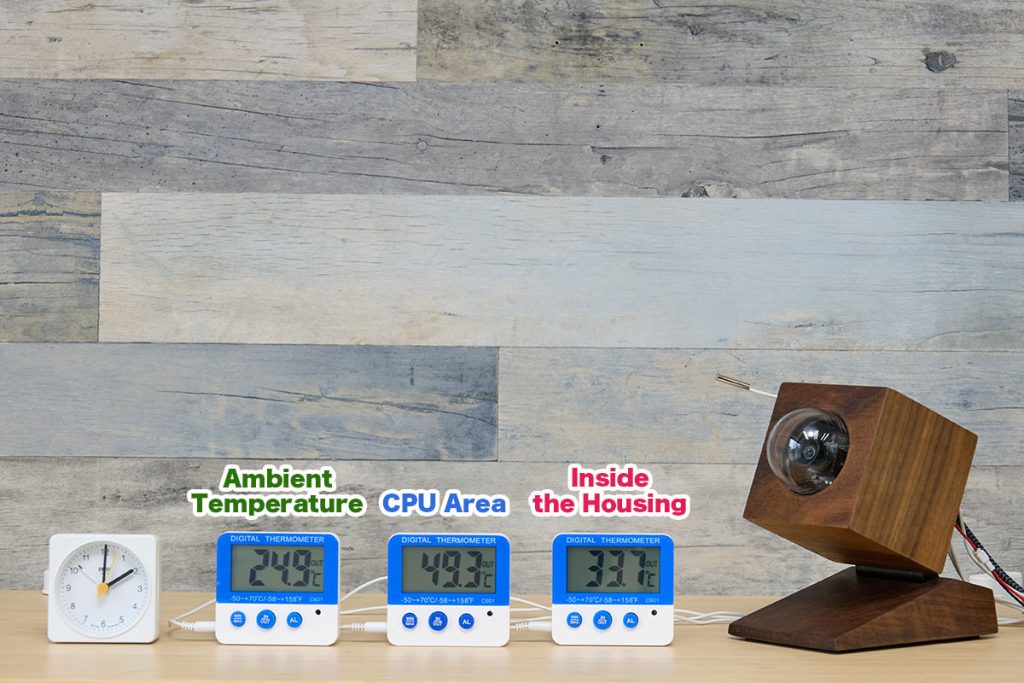
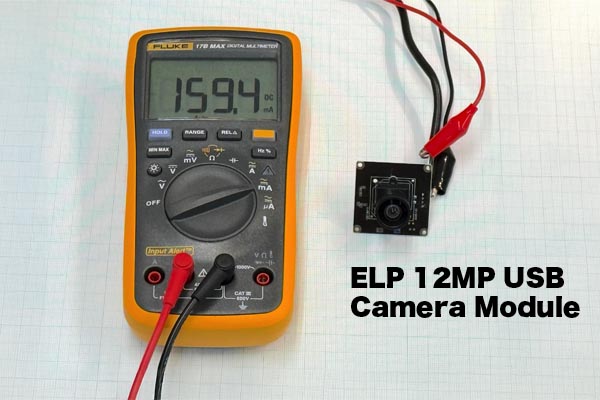
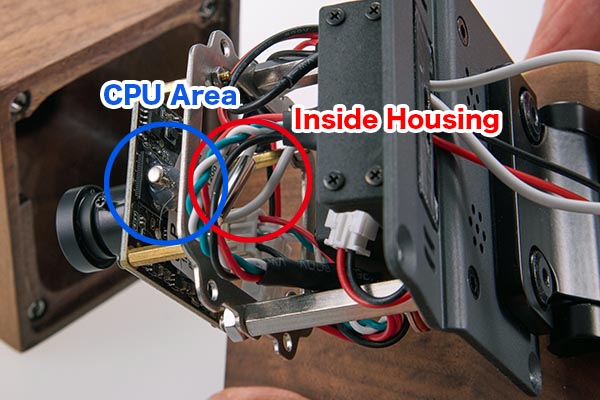
The measured value of the ELP 12MP USB camera was 159.4 mA @ 5V, and its power consumption was approximately 0.8 W.
Compared with the existing PoE camera configuration (approx. 2.9 W), heat generation is significantly lower, and in the same housing, the internal temperature rise is expected to be reduced to around 5.5°C.
With a low-power USB camera, it is highly likely that the ASA housing alone will be sufficient, while the heat sink and fan would serve to provide additional safety margin.
Equipment Used
| Item | Details |
| Camera | ELP 120fps USB camera module 12MP |
| Image Sensor | SONY IMX577 |
| Camera power consumption | 0.8 W |
| Camera housing | Wooden Camera Housing |
Cooling structure(Entaniya Silent Mount 315)
| Configuration | Specifications |
| Internal fan | Sunon MF30150V3-1000C-A99 45mA |
| Measurement Items | Temperature Range |
| Ambient Temperature | 25〜34℃ |
| Inside the Housing | 32〜38℃ |
| CPU Area | 38〜45℃ |
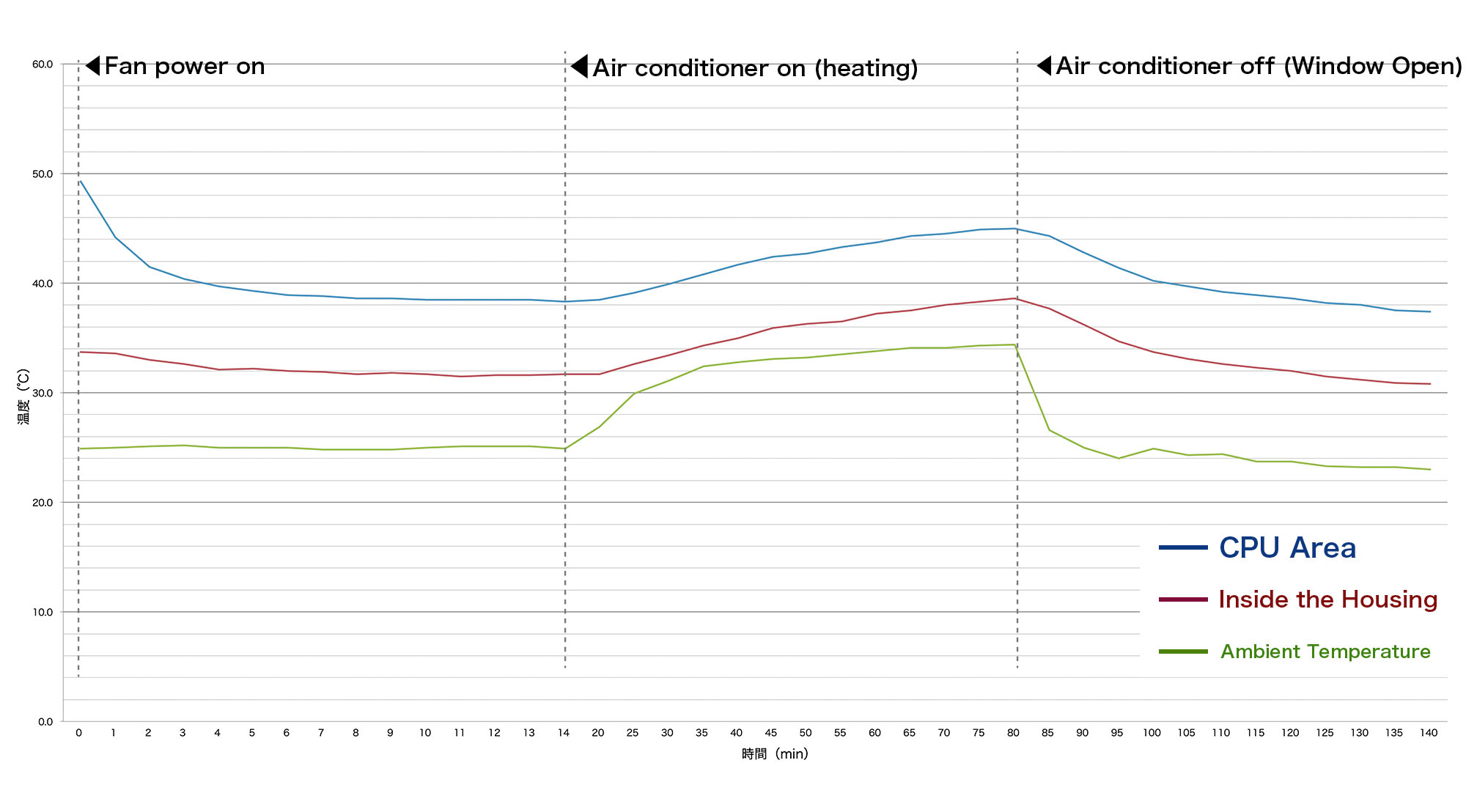
Based on the Measurement Results
Based on the measurement results, it was confirmed that the internal temperature of the case remains approximately +10°C above the ambient temperature.
Based on these findings, the estimated internal housing temperature and CPU temperature when using a camera with a power consumption of 2.64 W are shown below. As indicated, all values remain within the operating range.
| Ambient Temperature | Inside the Housing | CPU Area |
| -30℃ | -20℃ | -15℃ |
| -20℃ | -10℃ | -5℃ |
| -10℃ | 0℃ | 5℃ |
| 0℃ | 10℃ | 15℃ |
| 10℃ | 20℃ | 25℃ |
| 20℃ | 30℃ | 35℃ |
| 30℃ | 40℃ | 45℃ |
| 40℃ | 50℃ | 55℃ |
| 50℃ | 60℃ | 65℃ |
Request a Quote / Contact Us
f you would like a quotation based on product pricing or order quantity, please contact us here.
We will propose the optimal configuration tailored to your specific application and requirements.
For technical inquiries—such as specifications, installation methods, or compatibility with supported devices—please feel free to reach out as well.
Our specialists will support you from pre-deployment planning through to operational use.